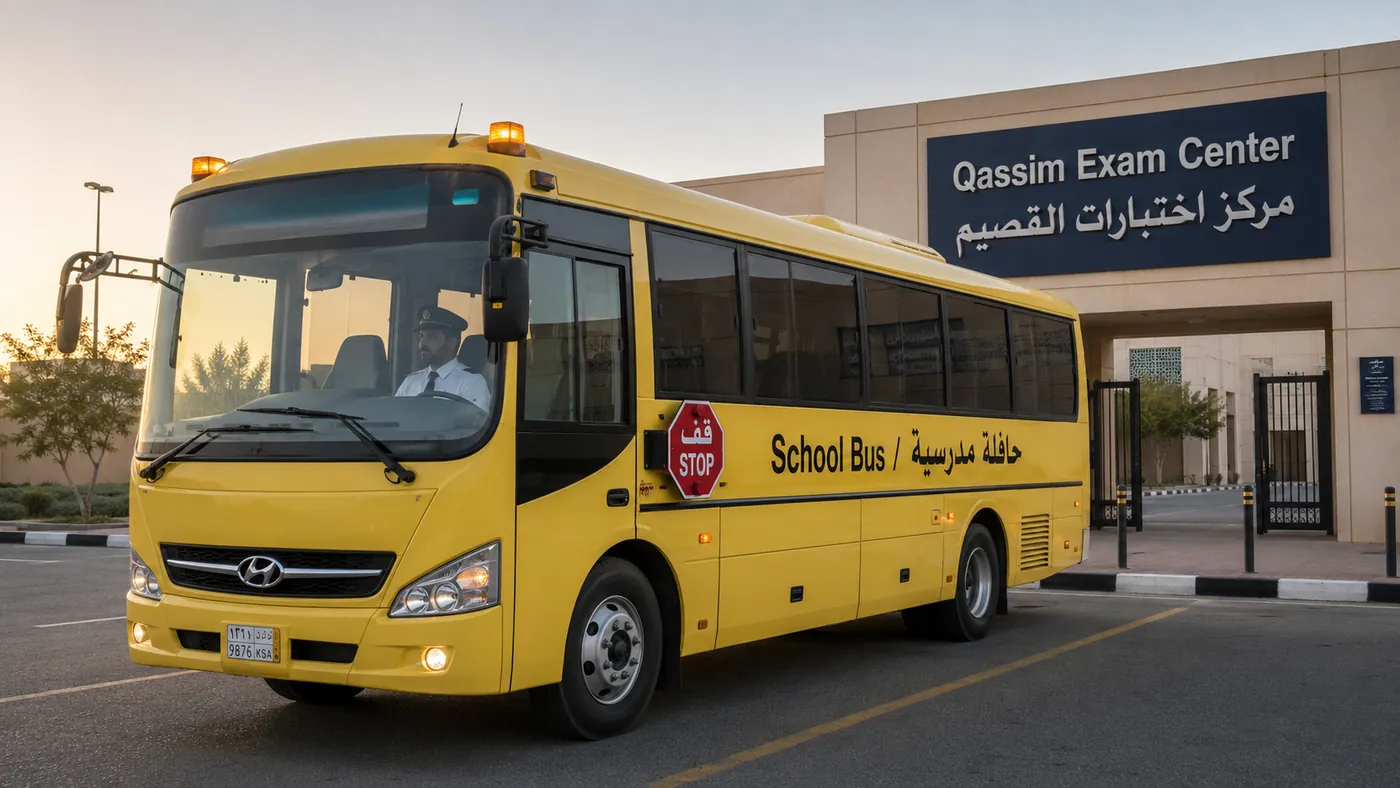
Campus Shuttle Saudi Arabia
Plan campus shuttle service in Saudi Arabia around real passenger flow, stop order, operating hours and waiting points across your education site.
This page helps your team design a shuttle that supports daily campus circulation instead of treating each movement as a separate transfer.
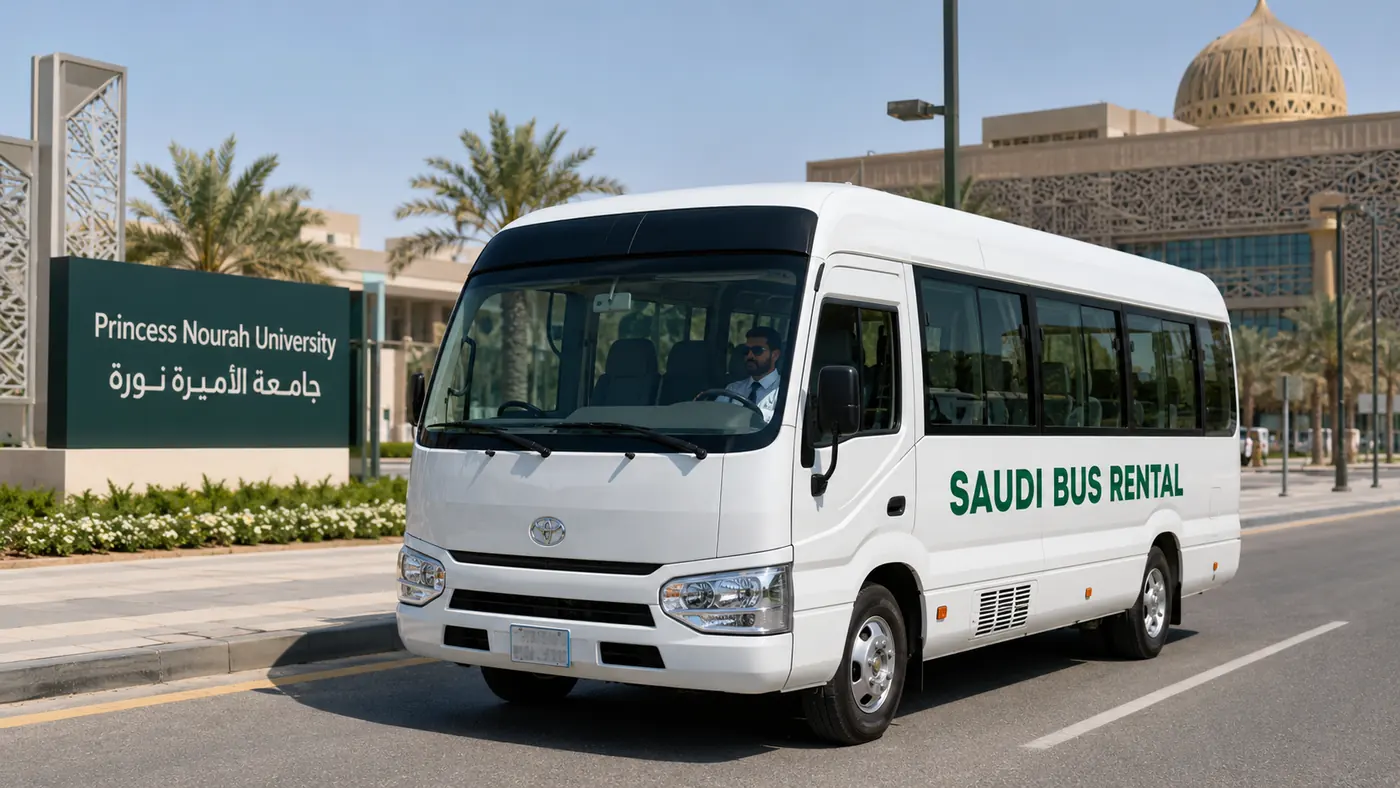
Plan Campus Shuttle Saudi Arabia around your real education route
For Campus Shuttle Saudi Arabia, your request should begin with the exact passenger movement, not a generic vehicle name. When campus facility managers, university transport teams, school operators, college administrators and event shuttle coordinators send pickup pins, destination points, passenger count, reporting time, return time and coordinator details, Saudi Bus Rental can review the route as driver-led education transport. That gives your team a clearer basis for comparing vehicle size, duty hours, waiting time and approval steps before anything is confirmed.
The route should be written in the same way your coordinator will manage it on the service day. Include where passengers wait, who confirms boarding, how late passengers are handled, which gate or venue entrance is used and when the vehicle should be released. For repeated shuttle movement between gates, buildings, accommodation, parking, libraries, labs, sports facilities and event areas, this level of detail reduces repeated phone calls and makes the service easier to control for teachers, supervisors, drivers and office teams.
For Campus Shuttle Saudi Arabia, the academic reason behind the movement should be visible in the route scope. Your coordinator should explain whether the trip supports campus shuttle circulation between gates, lecture halls, dormitories, parking areas, labs and student services, because that purpose affects when passengers must arrive, who supervises them and how the return should be released.
What Campus Shuttle Saudi Arabia helps your coordinator decide
This page is built for campus operations teams, university transport managers, facility departments and student services. It helps you decide how to organize campus shuttle circulation between gates, lecture halls, dormitories, parking areas, labs and student services while keeping students, faculty, administrative staff, visitors and campus support teams clear, ready and connected to the schedule.
Route clarity
Document loop route, frequency, peak periods, service days, stop locations and campus coordinator contact in one route scope so campus operations teams, university transport managers, facility departments and student services can review the same facts before approval.
Passenger readiness
Confirm students, faculty, administrative staff, visitors and campus support teams, their boarding points and any bags, materials or equipment before assigning the vehicle.
Timing discipline
Plan around lecture changes, dormitory departures, staff reporting, event periods and regular loop intervals instead of only the vehicle departure time.
Coordinator control
Name one coordinator who can manage unclear shuttle loops, gate changes, peak-time overload, long walking distances and inconsistent frequency without creating unofficial route changes.
Vehicle fit
Choose the vehicle after checking peak passenger loads, standing-free comfort, campus road access, bags and repeat shuttle flow, access conditions and route distance.
Quote comparison
Compare quotes by loop route, frequency, peak periods, service days, stop locations and campus coordinator contact so the scope is operational, not only a seat label.
Build Campus Shuttle Saudi Arabia around real timing and passenger control
The route plan should explain how students, faculty, administrative staff, visitors and campus support teams move from pickup readiness to arrival, activity start and return. For this education transport route, this means your enquiry should show the coordinator, pickup pins, destination, arrival target and release point before the quote is treated as final.
Separate fixed details from flexible details. Fixed details include date, destination and main reporting time. Flexible details may include final passenger count, waiting duration or return waves. This makes unclear shuttle loops, gate changes, peak-time overload, long walking distances and inconsistent frequency easier to manage before service.
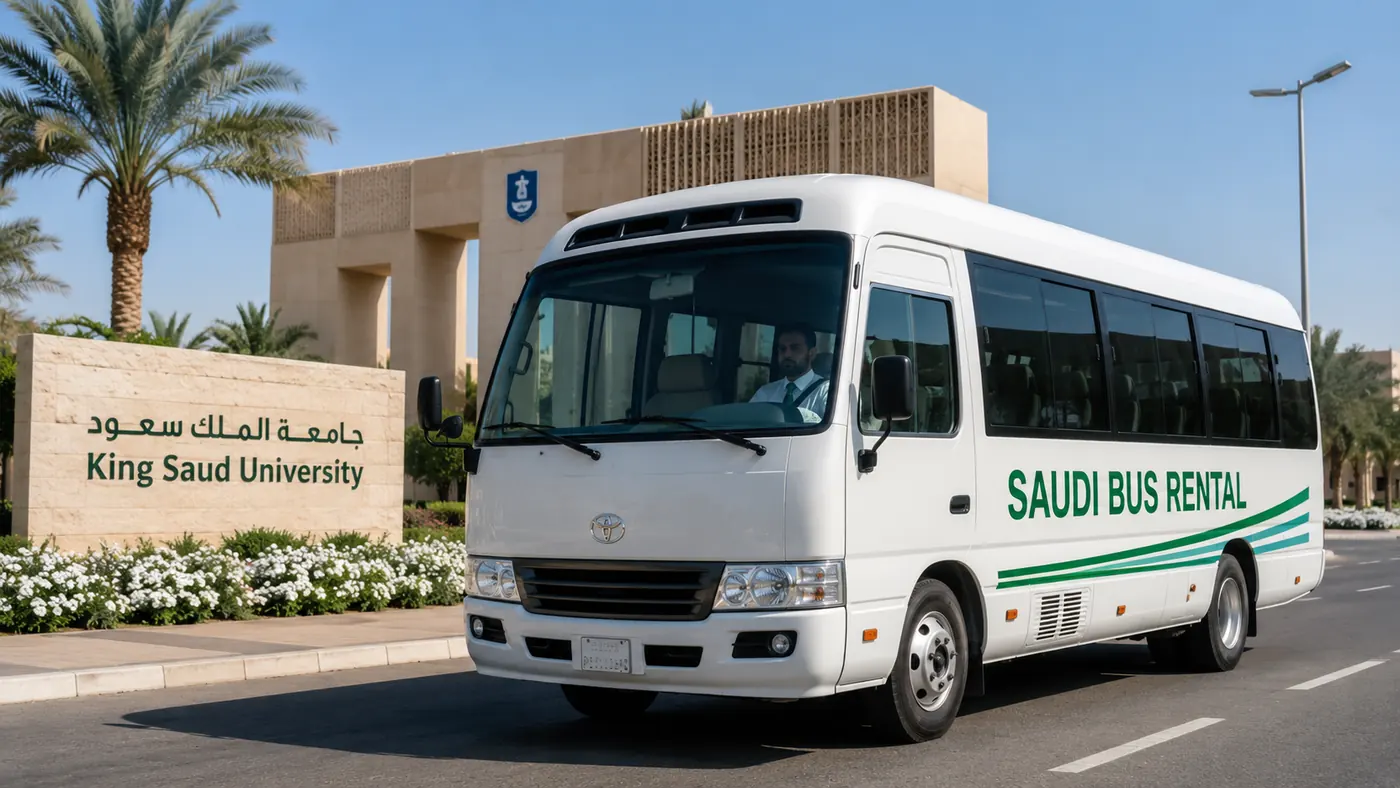
Where your planned route is normally useful
Use these examples when your requirement is close to campus shuttle circulation between gates, lecture halls, dormitories, parking areas, labs and student services. The final quote should still be based on your actual pins, loop route, frequency, peak periods, service days, stop locations and campus coordinator contact and the coordinator who controls the day.
University internal shuttle loop
Connect dormitories, faculties, libraries, labs and gates with a repeating route.
College parking-to-campus shuttle
Move students or visitors from parking areas to main entrances during peak hours.
School event campus shuttle
Support open days, sports days or ceremonies with short route rotation.
Training center building-to-building movement
Help participants move between classroom, workshop and assessment areas.
Choose capacity for this service scope by route behavior
For your route plan, capacity should follow peak passenger loads, standing-free comfort, campus road access, bags and repeat shuttle flow. The lowest visible seat count is not always the right choice if the route has unclear shuttle loops, gate changes, peak-time overload, long walking distances and inconsistent frequency. Select the vehicle that keeps boarding practical and protects the schedule.
Choose smaller when the route is controlled
Smaller transport can work when the passenger list is stable, pickup points are limited and lecture changes, dormitory departures, staff reporting, event periods and regular loop intervals allow a calm route without crowding or schedule pressure.
Choose larger when timing or comfort is sensitive
A larger vehicle may be safer operationally when peak passenger loads, standing-free comfort, campus road access, bags and repeat shuttle flow require more room or when unclear shuttle loops, gate changes, peak-time overload, long walking distances and inconsistent frequency could affect arrival discipline.
Split movement when groups behave differently
Split movement is worth considering when students, faculty, administrative staff, visitors and campus support teams do not travel as one group, when return timing changes by activity, or when unclear shuttle loops, gate changes, peak-time overload, long walking distances and inconsistent frequency would make one vehicle harder to control.
Quote details to confirm for this education transport route
Pricing for your planned route should be based on the route duty. Distance, stops, waiting time, vehicle category, service days and change risk can all affect the quotation, especially when your requirement includes campus shuttle circulation between gates, lecture halls, dormitories, parking areas, labs and student services.
Ask for the quote to show loop route, frequency, peak periods, service days, stop locations and campus coordinator contact. This gives finance, administration and operations teams a cleaner basis for approval and reduces unclear extras after the route begins.
- campus map or stop list
- operating hours and frequency target
- passenger demand by time block
- vehicle turning and parking notes
- daily, weekly or event duration
- coordinator and control point
- backup plan for peak demand
Example routes your team can use when explaining the requirement
These examples help your team explain the route in practical Saudi terms. They do not replace your exact pins, but they show how Riyadh campus loop, Jeddah dormitory shuttle, Dammam university circulation and Khobar college movement can be described for quotation.
Riyadh campus gate to faculties shuttle
Define stop order and peak passenger times.
Jeddah university accommodation to main buildings
Separate morning and afternoon peaks.
Dammam college parking shuttle
Plan vehicle frequency around class start and finish.
Madinah education complex internal shuttle
Confirm gates, waiting points and circulation timing.
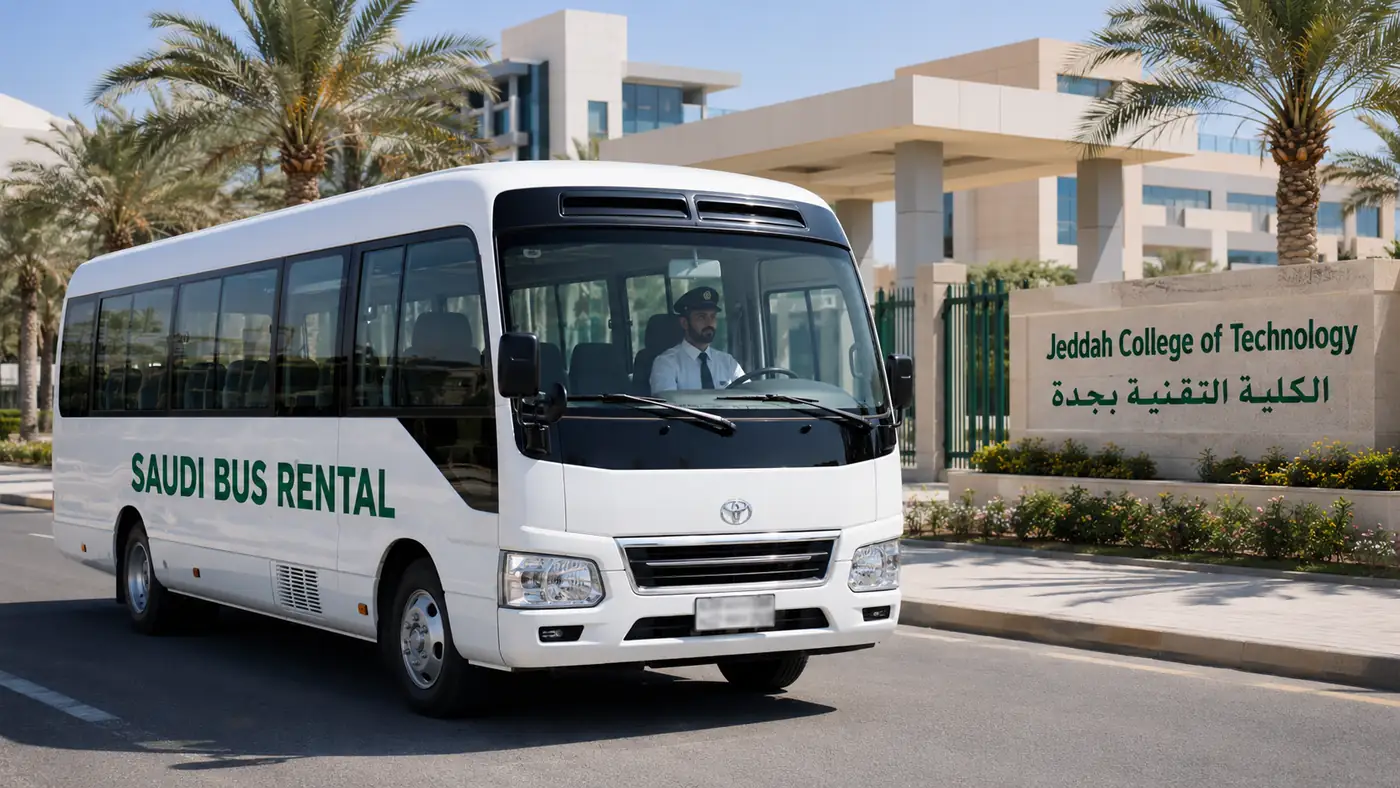
What can weaken your education transport request
Planning problems for campus shuttle usually appear when unclear shuttle loops, gate changes, peak-time overload, long walking distances and inconsistent frequency are not discussed before approval. Review these points before you compare the quote so the route is practical on service day.
Mistake 1
Not mapping the stop order.
Mistake 2
Choosing capacity before understanding peak flow.
Mistake 3
Forgetting lunch or evening peaks.
Mistake 4
Allowing unofficial stops to slow the loop.
Mistake 5
Not giving drivers clear campus access notes.
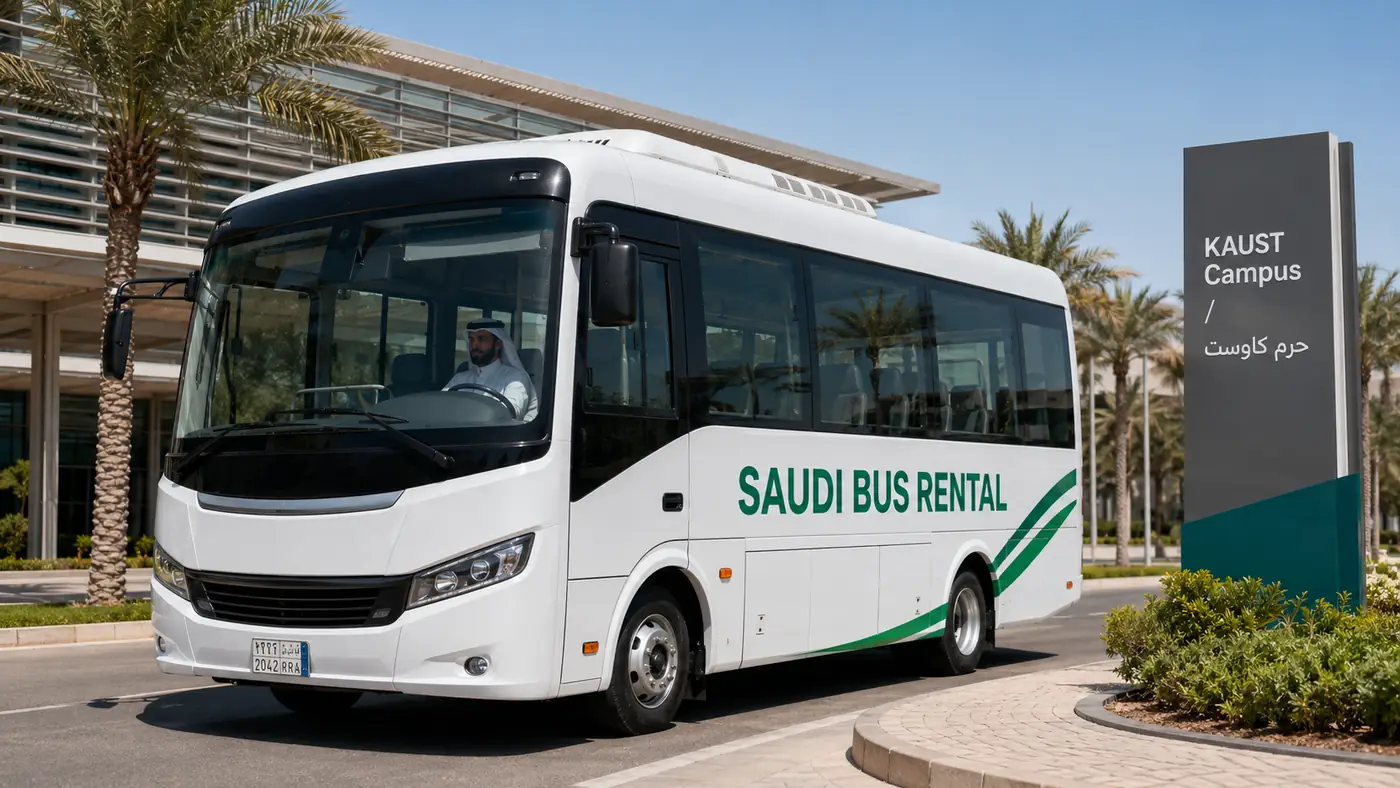
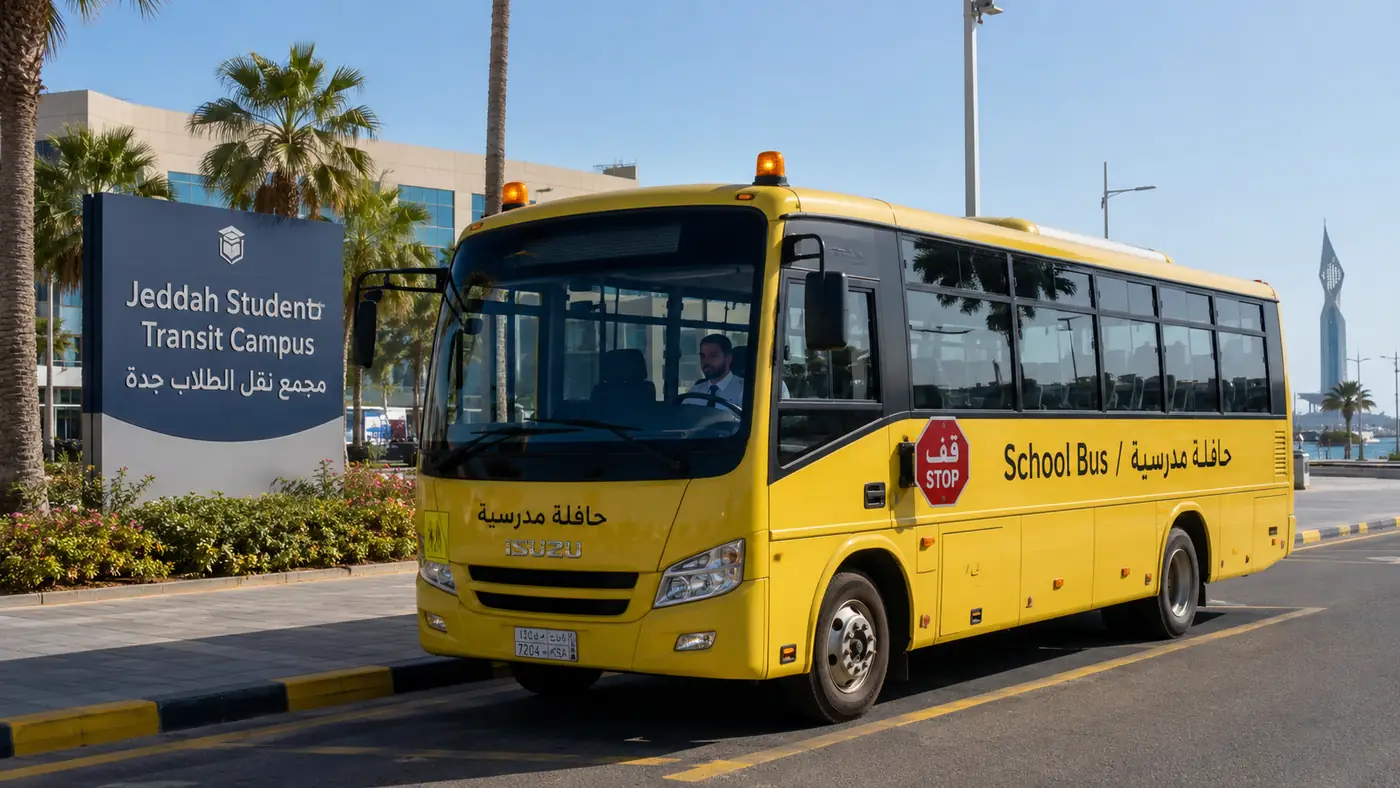
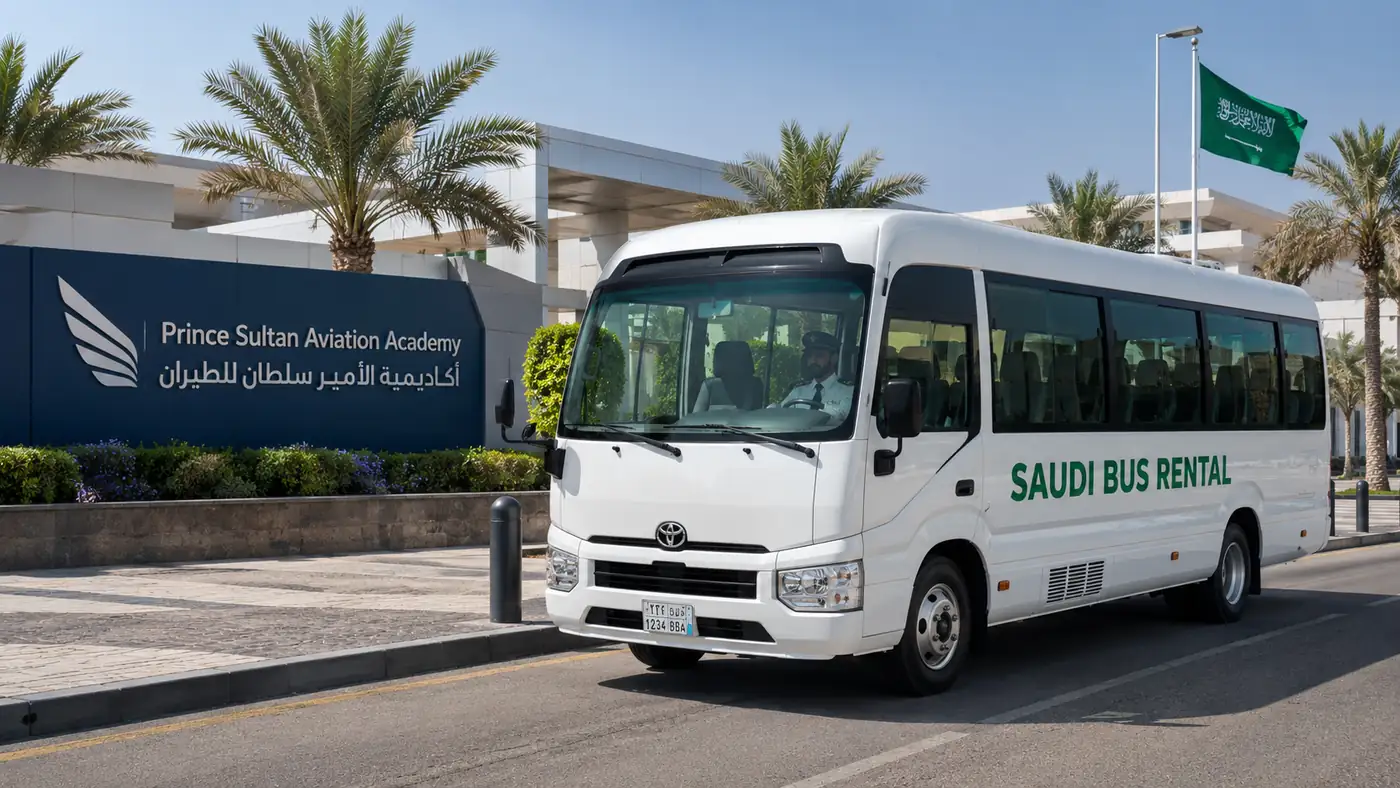
Education transport visuals for Campus Shuttle Saudi Arabia
These visuals help explain passenger readiness, route timing, capacity choice and coordinator control. Your final quote should still be based on your exact pickup points, passenger count, service date, waiting time and return plan.
Coordinator handoff for your route plan
For this education transport route, the route owner should prepare a campus loop sheet that names each stop, timing target, route owner and change notification method. That handoff should be short enough to share before service, but detailed enough to guide the driver, passengers, supervisors and approval team.
Write the limits clearly. If the quotation covers only loop route, frequency, peak periods, service days, stop locations and campus coordinator contact, do not leave extra stops, late waiting, second trips or passenger additions open to assumption. This protects the route from day-of-service pressure.
After the movement, record whether lecture changes, dormitory departures, staff reporting, event periods and regular loop intervals worked as planned, whether peak passenger loads, standing-free comfort, campus road access, bags and repeat shuttle flow were sufficient and whether the next route needs a larger vehicle, another pickup order or a different return method.
Before you confirm your route, check the route exactly as your passengers will experience it: where they stand, how they are counted, when they should be ready, which gate or venue entrance applies and who confirms the return. That review is especially important when the movement involves unclear shuttle loops, gate changes, peak-time overload, long walking distances and inconsistent frequency.
For the quotation stage, send the information in one message instead of multiple partial notes. Include loop route, frequency, peak periods, service days, stop locations and campus coordinator contact, then add any special instruction about peak passenger loads, standing-free comfort, campus road access, bags and repeat shuttle flow. This gives your coordinator, finance team and operations contact a cleaner route scope that is useful for passengers, supervisors and internal approval.
Before approval
Confirm whether this campus shuttle requirement is one-day, recurring, term-based, event-based or linked to a fixed academic calendar. The route owner should understand loop route, frequency, peak periods, service days, stop locations and campus coordinator contact before approving timing or capacity.
Before service day
Share one message with passengers and supervisors covering pickup point, ready time, what to bring, where the vehicle waits and who answers route questions for campus shuttle.
During movement
During service, keep the instruction tied to the campus shuttle route. Changes should pass through the named coordinator so the driver is not receiving different instructions from passengers, parents, teachers or department staff.
After return
Record whether lecture changes, dormitory departures, staff reporting, event periods and regular loop intervals worked, whether capacity was practical and whether future service needs a different vehicle, pickup order or return wave.
Continue to related Saudi education transport pages
Use these clean URLs when your requirement moves from campus shuttle into a nearby school, student, staff, campus, event or quote planning need.
Frequently asked questions about Campus Shuttle Saudi Arabia
These answers help you check timing, capacity, supervision, quote details and return movement before confirming your route.
What is a campus shuttle used for?
A campus shuttle moves students, staff, faculty or visitors between buildings, gates, parking areas, accommodation, labs, libraries, sports facilities or event points within an education site.
What details are needed for a campus shuttle quote?
Send the stop list, campus map if available, operating hours, expected passenger count by time block, vehicle preference, access notes and coordinator contact.
Is shuttle frequency more important than bus size?
Sometimes yes. If passengers arrive in waves, a reliable loop can be more useful than one oversized vehicle. Frequency, stop order and waiting time should be reviewed together.
Can campus shuttle service run only during peak hours?
Yes, if the peak times are clear. Morning arrival, midday movement, afternoon release or event departure can be scoped separately.
Can the shuttle support visitors during events?
Visitor shuttles can be reviewed with expected arrival waves, parking locations, event start time and return plan. Clear signage and coordinator control are helpful.
Which vehicle fits campus shuttle service?
The vehicle depends on passenger volume, stop distance, road access and frequency. Vans, minibuses or buses may be considered after the route loop is clear.
Can the route change after service starts?
Route changes can be reviewed, but new stops may affect timing and capacity. It is better to test the loop on paper before the first day.
How do we keep the shuttle from becoming delayed?
Limit unnecessary stops, define the stop order, publish pickup points and keep one coordinator responsible for changes and driver communication.
Request a clear quote for Campus Shuttle Saudi Arabia
Share your pickup points, passenger count, timing, return plan and coordinator contact for your planned route. Saudi Bus Rental can then review campus shuttle circulation between gates, lecture halls, dormitories, parking areas, labs and student services as a route-based, driver-led education transport requirement.