
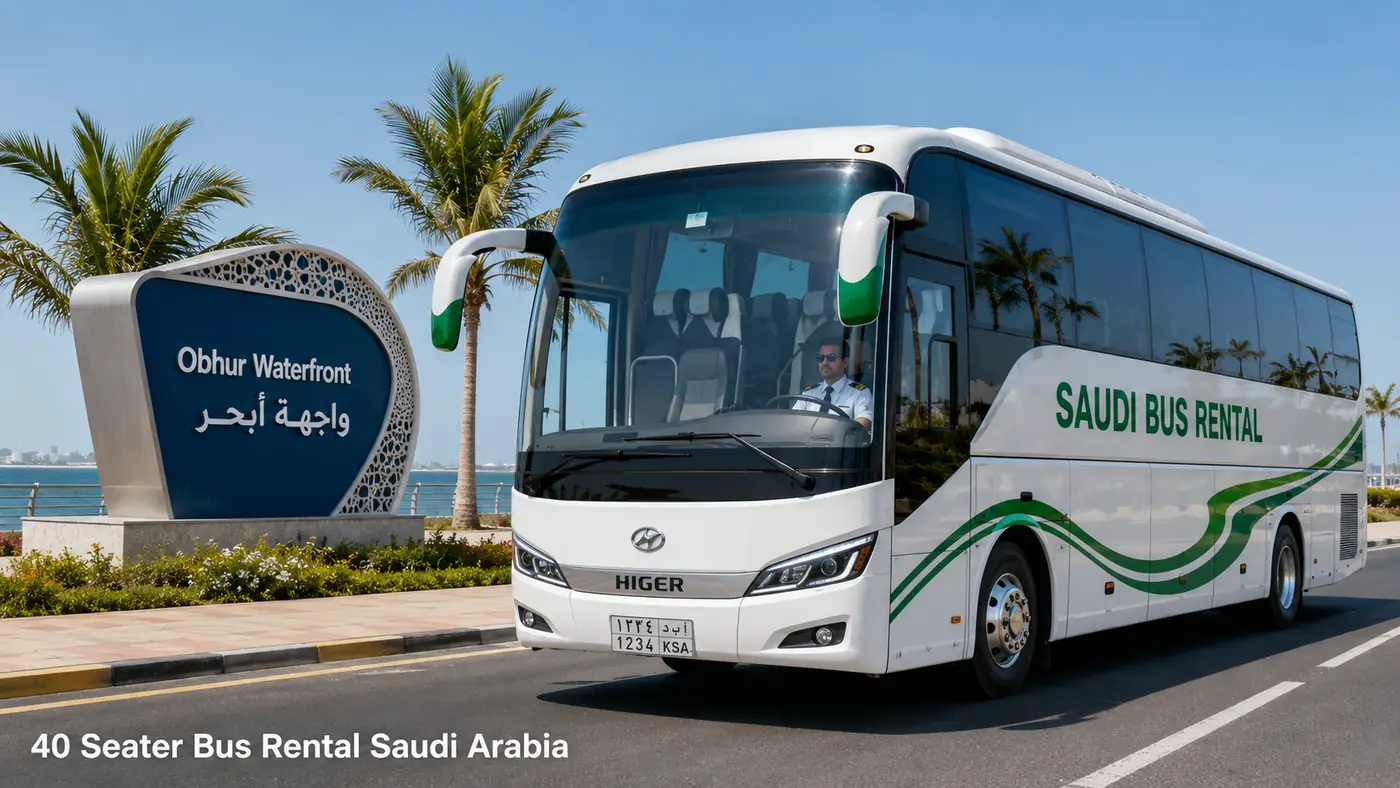
40 Seater Bus Rental Saudi Arabia
40 Seater Bus Rental Saudi Arabia is built for large staff groups, intercity routes, hotel delegations, events and company-approved passenger movement where you need a driver-led vehicle, clear route timing and a quote based on the real passenger movement rather than a generic seat number.
Your best plan starts with passengers, luggage, pickup access, travel distance, waiting time and return direction. That allows Saudi Bus Rental to recommend a full-size staff bus or coach that protects comfort, avoids unnecessary vehicle size and keeps the route easier to approve.
What you should confirm before booking this capacity
This section makes the page more useful for your real enquiry, not only for choosing a seat number.
A 40-seater works when your group has grown beyond mid-size bus planning but still needs a controlled, cost-conscious capacity. Send group size, shift timing, access notes and luggage so route suitability can be checked.
For industrial routes, schools and event groups, boarding discipline matters. Confirm who will coordinate passengers at pickup and who will approve any waiting or route changes.
When you send these details at the start, your quote can be reviewed faster and the vehicle recommendation stays connected to your passengers, timing, comfort level and access conditions.
How you should plan this capacity correctly
This page should help you decide whether this size is suitable, what details you should send and when a larger or smaller vehicle should be reviewed.
When you are comparing 40 Seater Bus Rental Saudi Arabia, the first question should be whether the vehicle size fits the real journey. A 40-seat request can be correct for a short city movement and still be too tight for an airport route with heavy luggage, a long intercity journey or a site visit where passengers need extra time to board. The route, group type and service duty should be reviewed together before confirmation.
For Riyadh, Jeddah, Dammam, Khobar, Makkah and Madinah, the same vehicle category can behave differently depending on access, traffic windows and passenger readiness. Hotel driveways, airport terminals, staff accommodations, industrial gates, school entrances, event venues and corporate towers all create different route pressure. Clear pickup pins and reporting times make the quote more reliable.
This service should therefore be explained as a complete passenger movement: who is travelling, where they board, where they arrive, how much luggage is carried, whether the vehicle waits and whether the return movement is part of the same duty. When these details are written clearly, you can compare the recommendation with nearby capacity options instead of guessing.
Where this capacity works best
The strongest capacity choice is the one that matches your passengers, your pickup environment and your approval process.
Large staff routes
This capacity is suitable for larger staff groups where shift reporting, accommodation clusters and return timing must be controlled.
Intercity and delegation movement
For long Saudi routes, comfort, luggage, driver duty and arrival discipline should be reviewed together.
Events and hotels
Group arrivals and departures need clear timing windows, venue access notes and passenger communication before dispatch.
Corporate approval
A full-size bus request should be written in approval-ready language so procurement and operations understand the route scope.
Route timing, pickup control and driver duty
Your vehicle size should support the route, access point and passengers instead of forcing the route to fit the vehicle.
Operational problems usually begin when the route is too vague. A driver may arrive near the location, but the service can still fail if the entrance is unclear, the coordinator is unreachable, the passengers are not ready or the return time has changed. The capacity plan should include those details before dispatch.
For repeated service, you should add working days, shift timing, pickup clusters, expected passenger changes and contract duration. For one-time service, the focus is date, time, city, route distance and whether the vehicle remains available after drop-off. Both cases require simple written instructions.
Examples such as large staff route, hotel delegation transfer, intercity group trip need different levels of timing control. That is why the quote should mention route sequence, waiting duty and vehicle category instead of giving a vague answer based only on seats.
When this capacity should be changed
Premium capacity guidance should be honest. Your correct vehicle recommendation may be smaller or larger than the page title when the route, luggage or comfort requirement changes.
Stay with this size when
The passenger number is stable, luggage is realistic, pickup points are accessible and the route does not require extra waiting beyond the agreed duty window. This is often the right approach for simple transfers, controlled staff movements and private group routes where the coordinator has already confirmed all details.
Consider a smaller option when
The group is smaller than expected, luggage is light, the destination has tight access or you want a more compact movement. In that situation, a 30 or 35 seater bus if the group is smaller and access needs are tight may reduce cost and make pickup easier without weakening the service plan.
Consider a larger option when
The passenger count may increase, the group has luggage, comfort is important, the route is long or boarding needs more space. In that situation, a 60 or 70 seater plan or multiple vehicles for very large movement can be safer than forcing the group into a tight capacity.
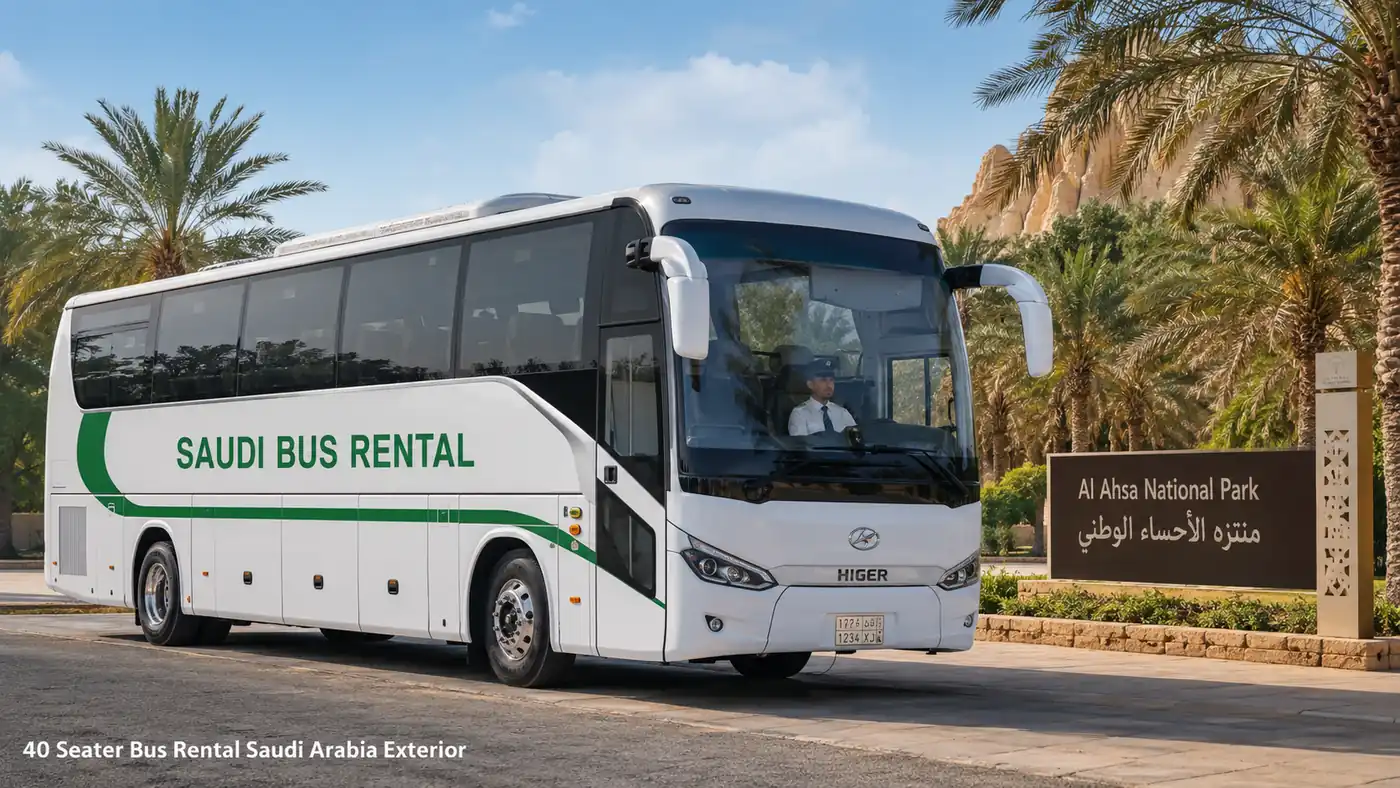
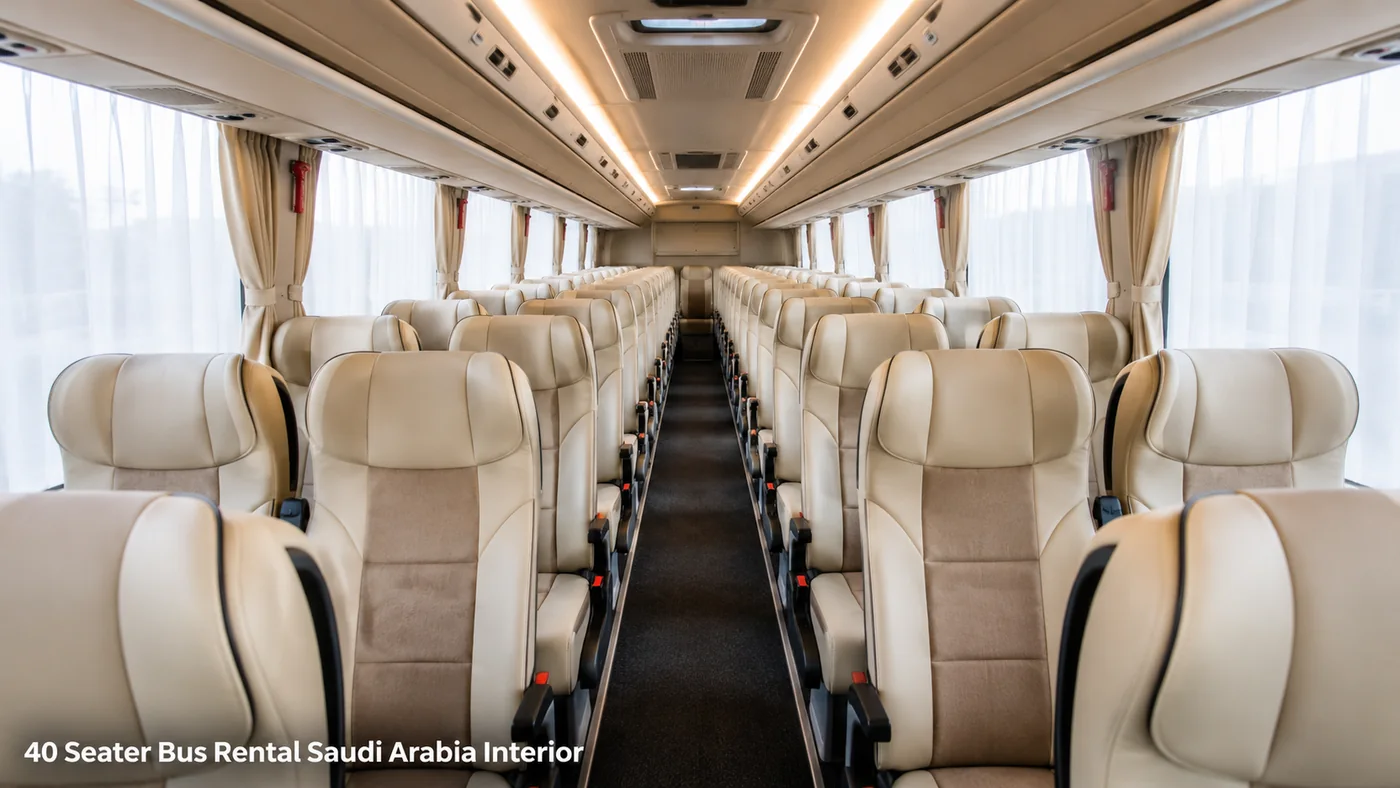
Exterior and interior planning views
Use the visuals to understand the vehicle category, passenger comfort expectation and route suitability. Your final allocation is confirmed by service scope, availability and passenger details.
What changes the final price and vehicle recommendation
Professional transport quotes should show the service pattern clearly so procurement, operations or family coordinators can approve without confusion.
Your quotation is strongest when it explains the actual route, not only the capacity. You should be able to see the date, timing, pickup point, destination, passenger count, luggage details, waiting requirement and return direction in the same scope. That reduces back-and-forth and makes approval easier for companies, hotels, families, schools, project teams and event coordinators.
Your approval is also easier when exclusions are clear. Extra stops, delayed boarding, longer waiting time, a new city, additional passengers or a different vehicle category should not be assumed unless the quote includes them. This protects you from vague promises and protects the service team from dispatching the wrong vehicle.
When the requested group is close to the maximum seat count, a larger vehicle may be more comfortable. When the group is smaller, this category may still be suitable because privacy, luggage and pickup flexibility matter. The final recommendation should always stay connected to the real passenger movement.
How this capacity changes by city and route type
Saudi transport planning depends on location, access and timing. The same vehicle can serve very different requirements in different cities.
Riyadh and business routes
Office towers, hotel entrances, compounds and project sites can create access rules. A clear driver reporting point and contact person help prevent arrival confusion.
Jeddah, Makkah and airport routes
Airport timing, hotel guest luggage and religious or visitor movement require careful pickup instructions, especially when passengers arrive in separate groups.
Dammam, Khobar and industrial areas
Factory gates, accommodation routes and project sites need timing discipline, access notes and a route contact who can support the driver on arrival.
Compare capacity, services and quote support
These links help you move from capacity selection into service planning, price review and final quote preparation without repeating the same link inside every paragraph.
Planning support
Nearby capacities
Service match
Frequently asked questions about this capacity
Answers focus on passenger count, luggage, Saudi route timing, vehicle category and quote-ready details.
What is included in this capacity service?
It is planned as driver-led passenger transport. The practical scope should confirm pickup point, destination, date, reporting time, passenger count, luggage, waiting time, return movement and coordinator contact.
Is a 40-seat vehicle enough for luggage?
It depends on luggage count, route length and passenger profile. A 40-seat plan should be checked before confirmation when passengers carry airport bags, tools, school items or event equipment.
Can this be arranged for companies?
Yes. Company requests should include service days, shift timing, pickup clusters, site access notes, passenger count, billing details and approval contact so the route can be reviewed clearly.
Can this capacity be used for airport or hotel movement?
Yes, if flight timing, terminal or hotel location, guest count, luggage and waiting instructions are shared in advance. Airport and hotel movements need careful timing because delays can affect the whole route.
How is the right vehicle category confirmed?
The suitable category is confirmed by reviewing seat count, luggage, access, comfort expectation, route distance, duty hours, parking conditions and whether the movement is one-way, return, full-day or recurring.
What should I send before requesting a quote?
Send exact pickup and drop-off pins, city, date, ready time, arrival target, passenger count, luggage details, extra stops, waiting time, return plan and the responsible contact person.
Send the route details before confirming this capacity
Share pickup point, destination, city, date, time, passenger count, luggage, waiting time, return direction and coordinator contact. Saudi Bus Rental can then review the request as a driver-led passenger transport service with a clear vehicle category and practical quote scope.